2026 Depression Therapy Journal
Therapy doesn’t always happen in an office—and neither does healing. In 2026, mental wellness tools are evolving beyond static worksheets or generic planners. The 2026 Depression Therapy Journal reflects that shift: a thoughtfully structured, clinically informed, and deeply personal resource designed not just to track symptoms—but to support agency, consistency, and gentle self-reconnection over time.
More Than a Planner—A Responsive Mental Health Companion
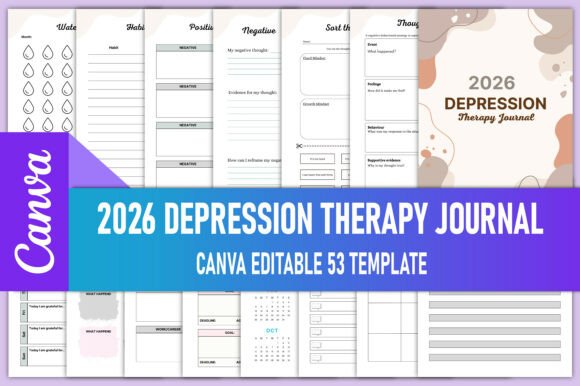
This isn’t a one-size-fits-all diary. It’s a 53-page, KDP-optimized interior built around evidence-informed practices—including mood tracking, gratitude logging, symptom reflection, and behavioral activation strategies like habit and exercise tracking. Each section serves a functional purpose: the Monthly Reflection prompts meaning-making after weeks of data; the Survival Planner offers low-energy scaffolding for high-stress days; the Connecting with My Soul spread invites values-based alignment—not forced positivity. Unlike journals that assume constant motivation, this one anticipates fluctuation. That realism is why it resonates with adults aged 20–50 navigating burnout, chronic stress, ADHD-related executive challenges, or long-term depression management.
Why Now? How Mental Health Tools Are Adapting to Real Lifestyles
People aren’t abandoning therapy—they’re expanding it. Telehealth adoption has normalized continuity of care, but digital fatigue is real. Many users now seek analog or hybrid tools that reduce screen time while preserving intentionality. The 2026 Depression Therapy Journal meets that need: printable, tactile, and intentionally unconnected—no app logins, no notifications, no data harvesting. Its design acknowledges modern constraints: a full-time educator might use the Daily Planner between classes; a freelancer could anchor their morning with the Meditation Tracker and Self-Care Tracker; someone in early recovery may rely on the Current Situation and Symptoms Tracker to spot patterns before they escalate.
It also aligns with how clinicians increasingly collaborate with clients—not as experts delivering fixed protocols, but as partners co-designing support systems. That’s where the editable Canva template becomes essential. A therapist can adapt pages for specific CBT or ACT interventions. A coach might add custom prompts for accountability. An educator building a wellness curriculum can localize language or adjust layout for accessibility. Flexibility isn’t a bonus—it’s built into the workflow.
Designed for Creators, Not Just Consumers
This journal was created with Amazon KDP publishers, independent therapists, wellness educators, and mental health content creators in mind. The interior files arrive print-ready: CMYK color mode, 300 PPI resolution, 8.5 × 11 inches without bleed—fully tested against Kindle Direct Publishing’s formatting requirements. No guesswork. No last-minute resizing. Just upload and go.
But what truly sets it apart is the editable Canva link. You’re not locked into a fixed design. Want to swap out “Anxiety Journal” for “Panic Response Log”? Adjust font size for dyslexic readers? Translate affirmations into Spanish or add culturally resonant imagery? Replace the default Vision Board grid with collage-style prompts? You can—without needing Adobe InDesign or graphic design experience. That level of customization lowers the barrier for practitioners launching niche offerings (e.g., journals for postpartum depression, LGBTQ+ affirming mental health tools, or trauma-informed student planners).
What’s Inside—and Why Each Element Matters
The 53-page structure balances breadth with focus. Here’s how key components serve practical, day-to-day needs:
- 2026 Calendar + Monthly Calendar: Synchronizes planning across timeframes—helpful for managing appointments, medication schedules, or therapy session dates without digital dependency.
- Mood Tracker + Symptoms Tracker: Goes beyond simple emoji scales. Includes space for brief contextual notes (e.g., “low energy after poor sleep,” “irritability during work meeting”)—supporting pattern recognition over weeks, not just days.
- Gratitude Log + Gratitude Tracker: Dual formats prevent repetition fatigue—one for quick daily entries, another for deeper monthly review. Research shows consistency matters more than volume; this design supports both.
- Habit Tracker + Exercise Log: Integrates behavioral health with physical wellness, recognizing their bidirectional relationship—especially relevant for those managing depression-related fatigue or psychosomatic symptoms.
- Depression Therapy Notes + Connecting with My Soul: Creates dedicated space for processing insights from sessions, readings, or quiet reflection—not as homework, but as integration.
- Bucket List + To Do List + Vision Board: Bridges aspiration and action. Rather than overwhelming goal-setting, these sections encourage micro-commitments aligned with identity and energy levels.
No page feels decorative. Even the Water Tracker includes optional hydration reminders tied to common antidepressant side effects (e.g., dry mouth). The Positive Thoughts section avoids toxic positivity—it asks for *one* grounded observation (“I made my bed today”), not forced optimism.
Not Just for Individuals—A Tool for Teams and Systems
Small practices, university counseling centers, and nonprofit wellness programs are beginning to license or co-brand journals like this one. Why? Because printed, customizable tools increase engagement in populations with limited tech access—or those who distrust algorithm-driven mental health apps. A community health worker distributing journals at a food pantry can use the Survival Planner to co-create realistic coping steps with someone experiencing housing instability. A school counselor might print only the Weekly Planner and Mood Tracker pages for students learning emotional regulation skills.
For creators listing on Amazon KDP, the package delivers immediate value: high-quality PDFs (print-ready), PNG and JPG files (for marketing thumbnails or social previews), and the editable Canva link—no extra fees, no subscriptions. That means faster time-to-market, lower production overhead, and the ability to iterate based on customer feedback (e.g., adding a “Medication Side Effect Log” in a future edition).
Realistic Expectations, Real Support
This journal won’t replace clinical care—and it’s not intended to. What it does offer is continuity: a consistent, compassionate structure to hold your experience when therapy is paused, waitlists are long, or you’re building skills between sessions. It meets people where they are—not as patients, but as humans with rhythms, preferences, setbacks, and quiet victories.
That’s reflected in its aesthetic, too. The interior design avoids clinical sterility or twee minimalism. Soft tones, clear hierarchy, generous margins, and intuitive icons make navigation feel safe—not demanding. There’s space to write freely, cross things out, skip pages, or return later. Healing isn’t linear. Neither is this journal.
Getting Started Is Simple—And Sustainable
You’ll receive everything needed to launch: print-ready PDFs optimized for KDP, raster files for promotional use, and a direct Canva editing link. No third-party plugins. No watermarked previews. Just clean, professional assets—ready for your branding, your audience, your mission.
If you're a creator building mental wellness resources, this interior saves dozens of hours in layout, color calibration, and KDP compliance testing. If you're supporting others’ mental health, it gives you a reliable, adaptable foundation—not a rigid template. And if you're using it for yourself? It’s permission to show up imperfectly, consistently, and kindly.
I hope you like my interior. Follow on my profile for new products. Note: To keep the original link active, please go to…