2026 ADHD Mental Health Journal KDP
Living with ADHD means navigating a world built for linear thinking—while your brain thrives on connection, motion, and meaning. A well-designed journal isn’t just paper and prompts; it’s scaffolding. The 2026 ADHD Mental Health Journal KDP delivers that support in two powerful formats: print-ready PDFs optimized for Amazon KDP publishing, and fully editable Canva templates you can personalize before uploading or using privately.
What This Journal Actually Does—Beyond the Buzzwords
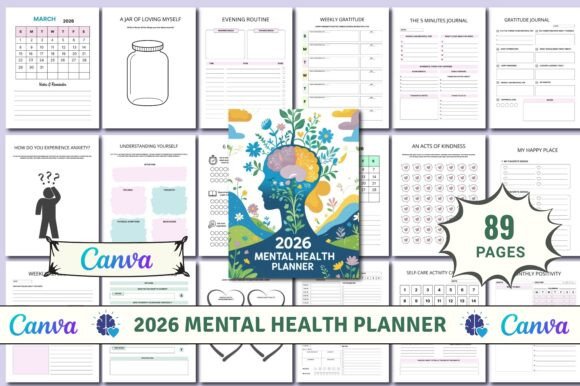
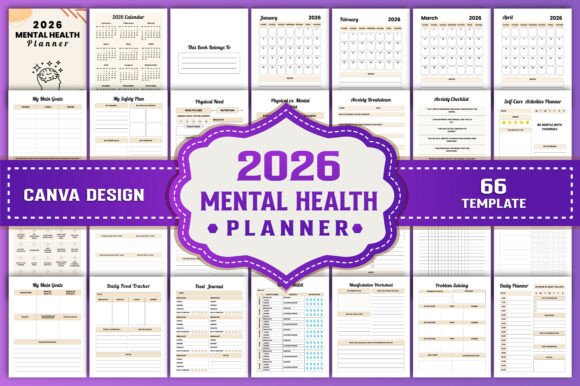
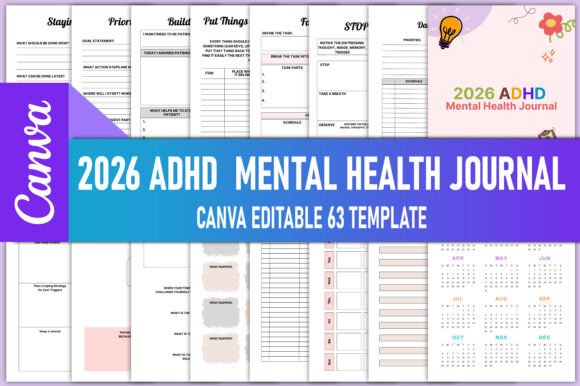
This isn’t a generic planner repackaged with “ADHD-friendly” slapped on the cover. Every page serves a documented need: staying on task, processing triggers, building patience, tracking mood *and* behavior patterns side-by-side, or mapping how stress shows up physically and mentally. You’ll find pages like STOPP Worksheet, Trigger Coping Cards, Habit Tracker, Thought Log, and My Gratitude Log—not as isolated exercises, but as interlocking tools. The 2026 calendar is embedded thoughtfully, not tacked on. Monthly reflection supports long-term growth. Annual goals sit beside water, sleep, and therapy notes—because mental health isn’t compartmentalized.
For Beginners Learning Self-Advocacy
If you’re newly diagnosed—or finally naming what’s been hard for years—clarity matters more than customization. The 2026 ADHD Mental Health Journal KDP gives structure without overwhelm. Pages like What Things Make Me Stressed and My Priorities help ground abstract feelings in observable patterns. No need to build from scratch. Just open, write, notice. The clean layout reduces cognitive load. For someone just starting out, reliability and gentle guidance matter most—not flashy design or 50 versions of a habit tracker.
For Educators & Coaches Supporting Others
You don’t need another resource to explain executive function—you need one students or clients can *use*, consistently. The journal’s dual format shines here: share the editable Canva link so learners adjust colors, fonts, or add their own prompts—and keep the print-ready PDF version ready for classroom handouts or printed workbooks. A teacher might simplify the Trigger Processing page for teens, while a coach uses the Weekly Priorities spread to co-create realistic goals during sessions. Flexibility meets fidelity.
For Creators Publishing on Amazon KDP
If you're building a catalog of mental wellness tools, speed-to-market and production quality are non-negotiable. The 2026 ADHD Mental Health Journal KDP comes pre-formatted: bleed, margins, CMYK-ready, with interior pages designed for crisp black-and-white printing. No wrestling with InDesign. Just upload, set pricing, and go live. And because the Canva file is included, you can quickly spin off variations—e.g., a “Focus-Focused Edition” with extra attention-training prompts—without redesigning from zero. That’s commercial value you can scale.
For Freelancers & Entrepreneurs Managing Energy, Not Just Time
Your calendar isn’t broken—you’re working within a nervous system that shifts gears unpredictably. The Daily Planner includes space for energy level rating alongside tasks. The Distraction Tracker helps distinguish between unhelpful interruptions and necessary pivots. The Self-Care Tracker doesn’t assume “self-care = bubble baths”—it logs movement, boundaries set, rest taken, meals eaten. For someone juggling client work, admin, and personal recovery, this journal honors complexity instead of demanding rigid adherence.
For Hobbyists & Lifelong Learners
You might not publish or teach—but you still want tools that evolve with you. The editable Canva link lets you swap in your favorite affirmations, add space for sketching, embed quotes that resonate, or translate sections into another language. Try the Mood Tracker alongside the Exercise Log for three weeks. Compare your Anxiety Journal entries with your Sleep Tracker. The journal becomes a living record—not a static product.
How to Know If This Fits *Your* Real Needs
Ask yourself:
- Do I need something I can use tomorrow? → The print-ready PDF works instantly—no editing required.
- Do I need to match branding, accessibility needs, or audience language? → The Canva file lets you change fonts (for dyslexia-friendly reading), adjust contrast, add icons, or localize content.
- Am I evaluating this for professional use? → Check if pages align with evidence-informed practices: STOPP is grounded in CBT, habit tracking reflects behavioral psychology, mood + symptom pairing supports clinical insight.
- Is long-term usability important? → Pages like Annual Goals, Monthly Reflection, and Doctor Visits encourage continuity across months—not just a single year’s worth of blank lines.
Not Just Another Template—A Thoughtfully Layered System
Look closely at how pages relate: the Focus Plan feeds into Daily Planner; Trigger Tracking informs Anger Management and Coping Cards; Gratitude Log sits beside Positive Thoughts—not as filler, but as complementary lenses. This isn’t about logging everything. It’s about choosing which levers to pull, when, and why.
The 2026 ADHD Mental Health Journal KDP doesn’t assume one “right” way to manage ADHD. It assumes you’re capable, curious, and deserving of tools that respect your time, your brain, and your humanity. Whether you’re holding it as a printed book on your desk, adapting it in Canva for your coaching practice, or uploading it to KDP to reach others who’ve felt unseen—this journal meets you where you are, and supports where you’re going.