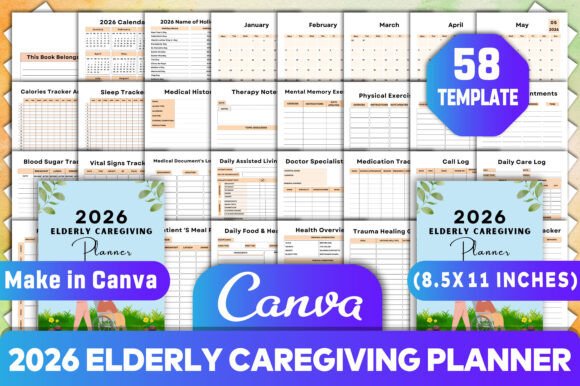
2026 Elderly Caregiving Planner
The 2026 Elderly Caregiving Planner is a structured, printable planning resource designed to support individuals managing the health, daily routines, and medical coordination of an older adult. It is delivered as a digital download containing editable Canva templates—formatted for KDP (Kindle Direct Publishing) interior use—and includes print-ready PDF, JPG, and PNG files. All content is fully customizable: users can add names, adjust layouts, insert personal notes, or modify tracking categories before printing or using digitally.
This planner is not software or a subscription service. It is a static, self-managed tool—similar in function to a physical binder or journal—but with intentional, clinically informed sections. Its scope spans medical documentation, daily care logging, nutrition tracking, mental and physical wellness activities, and caregiver coordination. The 2026 edition includes calendar-based features aligned specifically to that year: a full 2026 calendar, official U.S. federal holidays, and monthly planning pages covering June through December (with space to extend into early 2027 if needed).
People often explore the 2026 Elderly Caregiving Planner when they begin coordinating care for a parent, spouse, or other aging family member. Common triggers include recent diagnoses (e.g., diabetes, hypertension, dementia), transitions from independent living to assisted arrangements, post-hospitalization recovery, or increasing difficulty managing appointments and medications alone. It appeals especially to informal caregivers—family members without clinical training—who need clarity, consistency, and record-keeping support without relying on complex apps or fragmented paper systems.
One key benefit is comprehensiveness. Unlike generic planners, this version integrates specialized trackers: blood sugar and blood pressure logs, dental and lab test records, vaccination history, trauma healing goals, and mental memory exercises. It also supports coordination across providers—through specialist logs, call logs, and document location guides—which helps reduce miscommunication during multi-provider care. The inclusion of caregiver-specific tools—such as caregiver schedules, activity logs, and achievements—acknowledges the emotional and logistical labor involved, offering space for reflection and recognition.
However, its breadth entails tradeoffs. Because it is a fixed template set—not adaptive software—it requires manual entry and consistent upkeep. Users must decide which sections are relevant and commit time to filling them out regularly. A person managing only one or two routine prescriptions may find the medication tracker overly detailed; someone supporting a relatively healthy elder may rarely use the trauma healing or strength training logs. There’s no automatic reminder system, data analysis, or cloud backup—functions found in digital health platforms like MyChart, CareZone, or CaringBridge.
Customization is both a strength and a consideration. While the Canva file allows edits to fonts, colors, and layout, users need basic familiarity with Canva’s interface to make meaningful changes. Those unfamiliar with design tools—or who prefer plug-and-play functionality—may spend more time adapting than using. Also, because the planner is optimized for KDP interior formatting, page dimensions and margins follow Amazon’s print guidelines. That ensures professional-quality printed copies, but may require minor adjustments if users intend to bind it themselves or use non-standard paper sizes.
The 2026 Elderly Caregiving Planner is a strong fit in several situations. It suits caregivers who value tangible, distraction-free tools—especially those limiting screen time for themselves or the person they support. It works well for households where multiple people share caregiving duties and need a central, physical reference point (e.g., a notebook on the kitchen counter). It also supports individuals preparing for upcoming medical evaluations, such as annual Medicare wellness visits or long-term care assessments, by consolidating records in one organized format.
It may be less suitable for users seeking real-time collaboration, automated alerts, or integration with electronic health records. Families spread across different time zones who rely on shared digital updates might find a cloud-based solution more practical. Similarly, those needing accessibility features—like screen reader compatibility, voice input, or large-print auto-generation—will find the static PDF or Canva file limited without additional adaptation.
When evaluating whether this planner aligns with your needs, consider three practical questions:
- What level of structure do you need? If you’re overwhelmed by disorganized notes, missed appointments, or scattered medication lists, the built-in frameworks—like the monthly treatment plan or daily food health log—can bring immediate order. If your current system already works reliably, adding another tool may introduce redundancy.
- Who will use it—and how? A single caregiver comfortable with journals may thrive with this planner. A team of siblings coordinating remotely may benefit more from shared digital dashboards. Consider whether the person receiving care can participate meaningfully (e.g., checking off daily tasks) or whether entries will be made entirely by others.
- What’s your tolerance for maintenance? Tracking blood pressure twice daily, logging meals, and updating therapy notes each week requires sustained engagement. Review the table of contents critically: highlight the 5–7 sections you’d use weekly. If fewer than half feel immediately applicable, a simpler, modular planner—or selective use of individual pages—may be more sustainable.
It’s also worth noting alternatives. Free printable resources from the National Institute on Aging or AARP offer targeted tools—like medication lists or doctor visit worksheets—but lack integrated, year-long continuity. Commercial digital apps provide reminders and syncing but often require setup, subscriptions, and ongoing device access. The 2026 Elderly Caregiving Planner occupies a middle ground: more intentional than ad-hoc note-taking, yet more flexible and private than app-based systems.
Finally, expectations matter. This planner does not replace clinical advice, diagnose conditions, or automate healthcare decisions. It does not store sensitive data online or encrypt information. Its value lies in intentionality—not automation. When used consistently, it helps surface patterns (e.g., fatigue after certain meals, blood sugar fluctuations around specific activities), supports more informed conversations with providers, and reduces cognitive load for caregivers managing multiple responsibilities.
In summary, the 2026 Elderly Caregiving Planner is a purpose-built organizational aid—not a clinical intervention or tech solution. Its usefulness depends less on its completeness and more on how closely its structure matches your actual workflow, priorities, and capacity for regular use. For caregivers seeking a customizable, printable, and holistic framework grounded in practical health tracking, it offers a thoughtful, accessible starting point.