2026 Mental Health Planner KDP
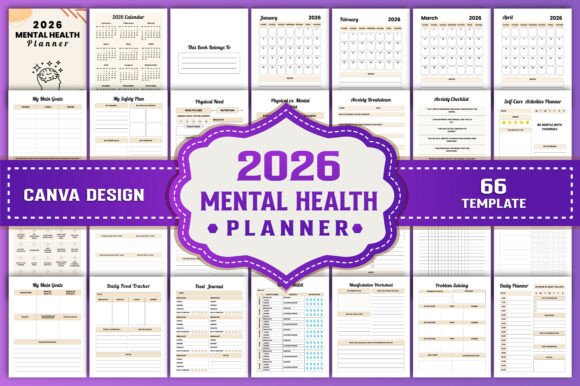
If you're exploring digital planning tools for emotional wellness, the 2026 Mental Health Planner KDP stands out—not just as another printable—but as a thoughtfully structured support system designed for real-life complexity. It’s not about rigid scheduling or perfectionist tracking. It’s about giving yourself permission to reflect, reset, and respond with kindness. Whether you’re launching your first self-care habit, managing therapy alongside work deadlines, or building resilience after burnout, this planner bridges intention and action—without overwhelm.
What People Often Misunderstand About This Planner
Many assume that because it’s labeled “editable” and “KDP-ready,” it’s automatically plug-and-play for every use case. That’s not quite right—and misunderstanding this leads to wasted time, mismatched expectations, or even avoidable rework.
For example, some creators download the files expecting full Canva customization only to discover their free Canva account lacks access to certain fonts or premium elements embedded in the original design. Others print the PDF without checking bleed or margin settings—resulting in clipped journal prompts or misaligned grids. Still others assume “print-ready JPG/PNG” means high-resolution output across all sizes, when in reality, raster files (JPG/PNG) scale poorly beyond their native dimensions—especially for large-format prints like vision boards or wall calendars.
These aren’t flaws in the product—they’re gaps in how users prepare before opening or printing. And those gaps directly affect usability: a cropped mood tracker undermines consistency; an uneditable affirmation page limits personal relevance; a non-responsive Canva link slows down adaptation for clients or students.
Three Practical Checks Before You Download or Buy
- Verify file types against your intended use: Need crisp, scalable prints? Prioritize the included PDFs—they preserve vector clarity and typography. Planning to tweak colors, affirmations, or layout? Confirm the Canva link is active *and* editable in your region (some templates require Canva Pro features for full font replacement).
- Match size to purpose: The interior comes in popular sizes (A5, Letter, A4, 8.5"x11")—but don’t default to “what fits your printer.” If you’ll use it daily on a desk, Letter or A4 gives breathing room for reflection prompts. For portability or travel, A5 balances detail and convenience. For classroom handouts or client worksheets, ensure the PDF version includes crop marks and CMYK color profiles if sending to a professional printer.
- Test editability before scaling up: Open one monthly spread in Canva and try changing a header font or swapping a gratitude prompt. Does text reflow cleanly? Do checkboxes remain functional? If elements lock or distort, it may signal limited layer organization—a red flag if you plan frequent customizations for coaching clients or team workshops.
Why “Editable” Doesn’t Mean “Effortless”—And How to Work With It
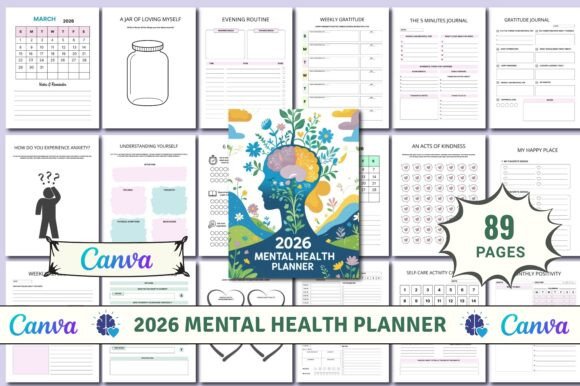
“Editable” here means flexibility—not automation. You won’t find AI-generated affirmations or auto-populated mood analytics. Instead, you get intentional frameworks: a Weekly Reflection page that invites honest assessment—not performance metrics; a Therapy Notes section built around open-ended prompts, not clinical jargon; a Skin Care Routine tracker that honors consistency over speed.
The power lies in what you bring to it—not what it does for you. One freelance writer uses the Daily Manifest page to rewrite limiting beliefs before pitching. A small business owner adapts the Life Balance Wheel quarterly to reassess energy allocation—not just time spent. A therapist prints the Anxiety Tracker and How Do You Experience Anxiety? pages as take-home tools, adding personalized coping cues in the margins.
This works because the structure supports nuance. But it only delivers when users treat editing as co-creation—not decoration. Swapping “My Happy Place” with “My Calm Space” matters. Replacing generic goals with Smart Goal Setting language (“I will journal for 7 minutes, 3x/week, using my morning coffee ritual as anchor”) makes growth tangible.
Avoiding Common Setup Mistakes
One overlooked step? Skipping the Belongs To page setup. It seems minor—just a name line—but it’s your first act of claiming space. Without it, printed copies feel impersonal, especially if sharing with clients or students. Likewise, ignoring the Quarterly Goals spread while diving straight into daily trackers often leads to misalignment. Goals set without seasonal context tend to drift or collapse under urgency.
Another subtle pitfall: treating the 5 Minutes Journal as a timer-bound task rather than a threshold practice. It’s not about filling every line—it’s about showing up for five breaths of attention. When users force completion, they miss the point. Better approach? Use a highlighter to mark one prompt per day—not all three. Let the rest wait until curiosity returns.
And don’t overlook the Mindset Reset and Vision Board pages as “extras.” They’re scaffolds—not decorations. One educator prints the Vision Board template on cardstock, cuts out affirmations with her students, and posts them beside classroom doors. The physical act deepens ownership far more than scrolling through a digital version ever could.
Realistic Expectations for Quality and Use
You’ll receive high-resolution JPG, PNG, and print-optimized PDF files—no watermarks, no hidden layers. But remember: JPGs are ideal for web previews or social media snippets; PNGs retain transparency for overlays or digital stickers; PDFs deliver fidelity for home printing or commercial KDP uploads. Choose based on function—not familiarity.
If you’re listing this as a KDP interior, confirm the PDF meets Amazon’s latest specs: 300 DPI, embedded fonts, no password protection, and correct bleed (0.125" for standard trim). Using the provided PDF avoids conversion errors that trigger KDP rejection—errors easily missed when exporting from Canva manually.
Finally, the planner doesn’t promise transformation. It offers repetition with resonance. The Daily Mindfulness prompt won’t erase stress—but doing it twice a week builds neural pathways toward pause. The Habit Tracker won’t fix sleep hygiene overnight—but marking “yes” on three consecutive nights reinforces agency. Progress lives in those small, repeated yeses—not in flawless execution.
Your Next Step Isn’t Perfection—It’s Permission
The 2026 Mental Health Planner KDP works best when treated as a companion—not a critic. It holds space for anxiety and joy, planning and pausing, structure and spontaneity. What matters most isn’t how many pages you fill, but whether the act of opening it feels like returning home—to yourself.
So before you click “add to cart” or open Canva: ask what kind of support you truly need this year. Clarity? Consistency? Compassion? Then let the planner meet you there—not the other way around.