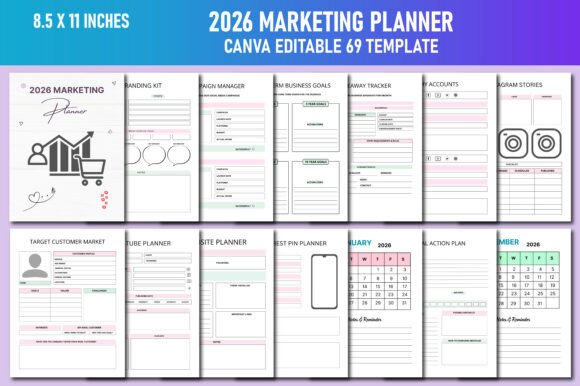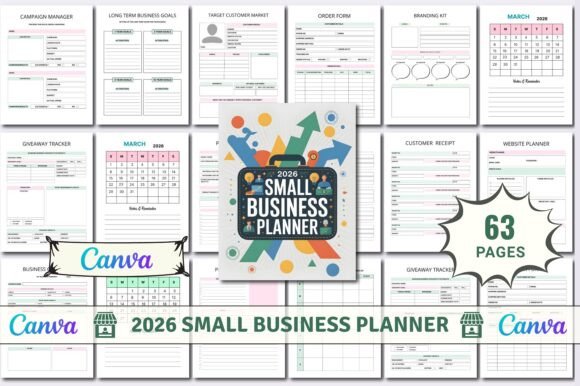
2026 Small Business Planner KDP
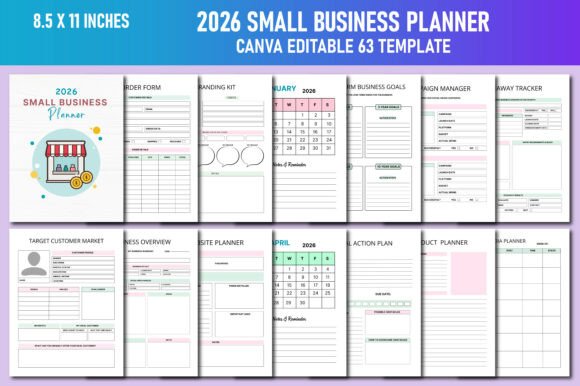
Running a small business in 2026 means balancing agility with intention—responding to market shifts while staying grounded in strategy, cash flow, and customer relationships. That’s why the 2026 Small Business Planner KDP isn’t just another printable planner—it’s a responsive, customizable operations toolkit designed for real-world use across home offices, retail spaces, studios, and service-based businesses. Unlike static templates or generic calendars, this planner integrates planning, tracking, and branding into one cohesive system—delivered as high-quality, print-ready JPG, PNG, and PDF files, plus an editable Canva link you control.
Why a Purpose-Built Planner Matters More Than Ever
Today’s entrepreneurs face tighter margins, faster customer expectations, and more fragmented tools. Many juggle spreadsheets for finances, sticky notes for tasks, separate apps for social media scheduling, and handwritten receipts—all while trying to define their brand voice or refine product offerings. The result? Cognitive overload, inconsistent data, and missed opportunities to connect insights across functions.
The 2026 Small Business Planner KDP responds directly to that reality—not by adding another app, but by consolidating essential workflows into one tactile, visual, and adaptable format. It’s built on the understanding that clarity starts with structure: knowing where your inventory sits *while* reviewing last month’s sales, aligning seasonal promotions with your marketing plan, or updating your target customer profile alongside fresh feedback. This isn’t about rigid scheduling—it’s about creating intentional touchpoints between strategy and execution.
Designed for How You Actually Work—Not How Systems Assume You Should
This planner reflects how modern small business owners operate: hybrid, iterative, and highly personalized. You might run a handmade ceramics shop from your garage, manage client projects remotely as a freelance web designer, or launch a local wellness studio with a tight budget and big community goals. Your needs aren’t served by one-size-fits-all templates—or by forcing your process into software that doesn’t match your rhythm.
That’s where the editable Canva link becomes indispensable. You’re not locked into preset layouts or fonts. Want to highlight tax deduction categories relevant to your industry? Swap in your logo and brand colors on the Branding Kit page. Need space for vendor notes next to your Suppliers List? Resize the table. Prefer weekly over monthly financial snapshots? Duplicate and adapt the Expense Tracker. These aren’t cosmetic tweaks—they’re functional adjustments that keep the planner aligned with your evolving priorities.
More Than Pages—It’s a Living Business System
Browse the interior pages, and you’ll notice something distinct: no filler. Every section serves a documented operational need:
- Business Overview + Branding Kit: A concise foundation—not for pitch decks, but for internal alignment. Helps clarify mission, tone, visual identity, and core differentiators before launching campaigns or hiring support.
- Launch Your Shop + Target Customer: Guides early-stage founders through practical validation steps—beyond “who’s my ideal client?” to “where do they spend time, what objections do they raise, and how does my pricing reflect perceived value?”
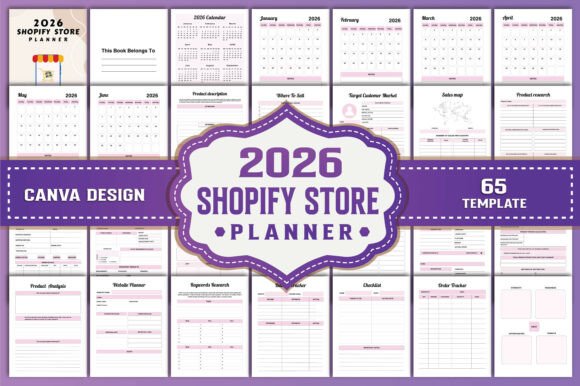
- Sales & Inventory Trackers: Designed for cross-reference. Update your Monthly Sales sheet, then instantly compare against Product Inventory levels and Income/Expense trends—no manual export or formula building required.
- Campaign Manager + Social Media Planner: Connects content themes to measurable outcomes. Map a seasonal promotion (e.g., “Back-to-School Bundle”) across email, Instagram posts, and in-store signage—and track engagement, conversions, and ROI side-by-side with your Profit Tracker.
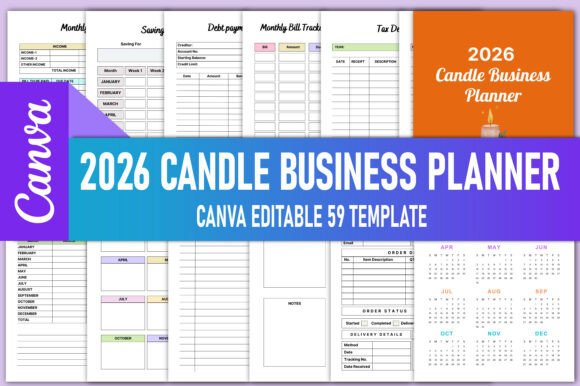
- Tax Deduction + Bill Payment Trackers: Built for U.S.-based solopreneurs and LLCs who file Schedule C. Includes common deductible categories (home office, mileage, software subscriptions) and space for receipts, dates, and descriptions—ready for CPA review or self-filing.
These aren’t isolated worksheets. They’re interconnected. When you log a customer receipt, you’re also feeding your Sales Tracker. When you update your Competitor Analysis, it informs your Marketing Plan and Seasonal Promotions. That coherence reduces duplication and surfaces insights you’d otherwise miss—like noticing that a specific discount code drove both higher order volume *and* lower average profit margin, prompting a pricing reassessment.
Print-Ready, Flexible, and Thoughtfully Sized
Whether you prefer writing by hand in a bound notebook or printing single pages to pin above your desk, the 2026 Small Business Planner KDP supports both. Interiors come in widely used physical sizes—including 8.5" x 11", A4, and 7" x 9"—so they fit standard binders, wall frames, or tablet stands. All JPG and PNG files are high-resolution (300 DPI), ensuring crisp text and clean lines whether printed at home or sent to a local print shop.
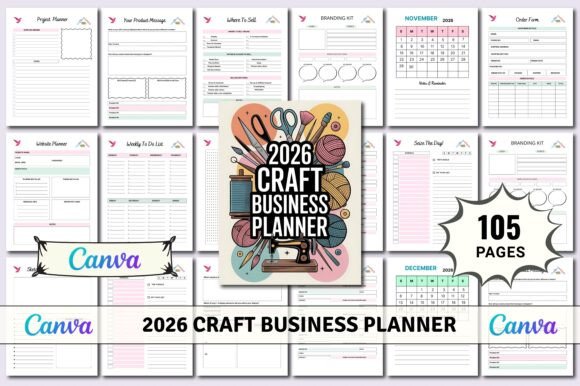
And because workflows vary, the files are intentionally modular. Print only the Budget Tracker and Weekly To-Do List for your current quarter. Save the Website Planner and Meeting Notes for when you’re refining your digital presence or prepping for investor conversations. There’s no pressure to “use it all”—just choose what moves your business forward, right now.
Realistic Customization—No Design Skills Required
You don’t need to be a graphic designer to make this planner yours. The included Canva link opens directly into a fully editable version—pre-formatted with consistent spacing, professional typography, and intuitive layers. Change colors in two clicks. Adjust column widths with drag-and-drop. Add your own icons or upload custom illustrations. Even if you’ve never used Canva before, the layout guides you: headings are clearly labeled, tables have editable headers, and page titles stay anchored so nothing breaks when you resize.
This level of flexibility matters because your business isn’t static. A freelance photographer may start the year focused on portrait sessions, then pivot to commercial clients mid-year—requiring updated service packages, new contract language, and revised pricing tiers. With this planner, those updates happen in minutes—not hours spent rebuilding spreadsheets or reformatting documents.
Supporting Sustainable Growth—Not Just Busywork
In an era where burnout is common and attention is scarce, effective planning isn’t about doing more—it’s about focusing on what truly drives progress. The 2026 Small Business Planner KDP helps surface those leverage points: Is your Annual Profit Loss revealing a seasonal dip you can offset with a pre-order campaign? Does your Customer Feedback page show recurring requests for faster shipping—prompting a logistics review? Are your Long-Term Business Goals still aligned with your current capacity and energy?
It doesn’t promise overnight success. But it does offer consistency—a reliable place to record decisions, reflect on outcomes, and adjust course with evidence—not intuition alone. For educators launching a curriculum store, bloggers scaling affiliate partnerships, or makers expanding wholesale accounts, that grounded rhythm makes growth sustainable, not exhausting.
What Users Are Doing With It Today
Small business owners are already integrating this planner into daily routines: a boutique owner uses the Order Form and Collection Ideas pages to prototype new product lines before ordering inventory; a virtual assistant prints the Meeting Notes and Project Planner sheets to structure client onboarding calls; a food truck operator combines the Seasonal Promotions and Social Media Planner to coordinate festival appearances with targeted Instagram Stories and email announcements.
None of these use cases require tech integration or subscription fees. Just clarity, customization, and continuity—tools that grow with your business, not ones that expire or lock features behind paywalls.
A Tool That Evolves With You
The 2026 edition reflects subtle but meaningful refinements over previous years—not just updated dates, but smarter spacing, clearer category labels, and added fields based on user feedback (like the Tax Deduction Coupons section, which now includes space for state-specific exemptions). It’s not chasing trends; it’s listening to how real people manage real constraints.
As AI tools handle routine tasks and automation handles scheduling, the human advantage lies in interpretation, empathy, and strategic synthesis. The 2026 Small Business Planner KDP doesn’t replace those skills—it creates the quiet space where they thrive.