2026 the Self Discovery Journal
If you’ve ever sat down with a blank notebook, unsure where to begin—or worse, abandoned journaling after a week because it felt rigid, irrelevant, or just too much—2026 the Self Discovery Journal was built for you. It’s not another generic lined notebook with a motivational quote on the cover. It’s a thoughtfully structured, fully editable resource designed to meet real-life rhythms: your changing goals, shifting energy levels, seasonal workloads, and evolving sense of self across the year ahead.
This isn’t about perfection. It’s about showing up—with honesty, curiosity, and flexibility—for yourself in 2026. Whether you’re launching a side hustle, navigating career uncertainty, healing from burnout, supporting students through emotional growth, or simply trying to remember what lights you up amid daily demands, this journal meets you where you are.
Where and when people actually use it
Most journaling tools fail because they assume one ideal time or place to write. But life doesn’t work that way. A freelance graphic designer might open 2026 the Self Discovery Journal at 6:30 a.m. with coffee, using the monthly planner to block creative hours before client calls flood her inbox. Meanwhile, a high school teacher may flip to the habit tracker during lunch break—not to log “meditate daily,” but to quietly note, “Spoke calmly to Maya after class. Felt grounded.” That small act becomes data she revisits before parent-teacher conferences.
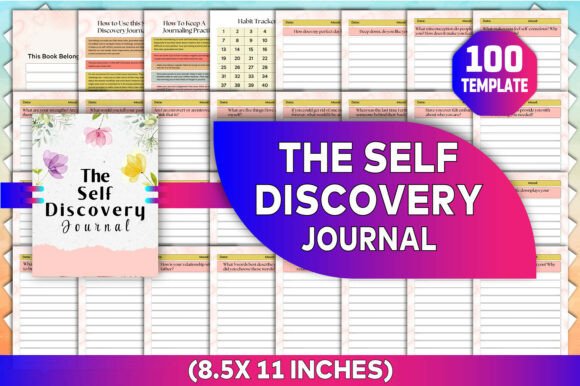
A small business owner uses the “This Book Belongs To” page not just for their name—but as a gentle boundary reminder: *This space is mine, not my LLC’s.* They paste receipts, sketch product ideas in the Notes section, and cross-reference holiday dates (like Juneteenth or Diwali in 2026) when planning inclusive marketing calendars. An educator building SEL curriculum pulls the “How to Keep a Journaling Practice” guide to adapt prompts for teens—and reuses the Canva template to create classroom handouts without redesigning from scratch.
Why customization matters more than ever
You don’t need another static PDF you can’t adjust. You need control—over fonts, colors, layout spacing, even whether the habit tracker shows checkboxes or sliders. That’s why every file in 2026 the Self Discovery Journal arrives as a 100% customizable original: editable Canva link, high-res PDF (300 DPI), plus JPG and PNG versions for digital sharing or printing on demand.
Imagine swapping out the default 2026 holiday list for your local observances—or adding your child’s school schedule alongside the monthly planner. Or deleting the “Gratitude Log” page entirely and replacing it with a “Client Feedback Summary” tab if you’re a coach. Because it’s built in Canva, no design software is required. Drag, type, resize—then download fresh print-ready files in seconds.
Real outcomes—not just features
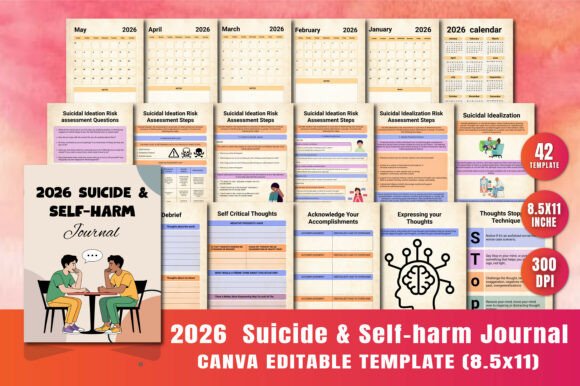
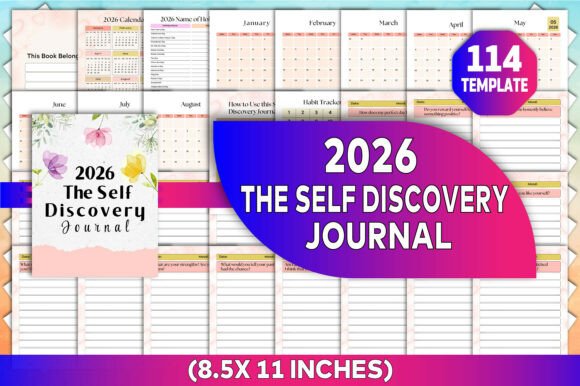
The “2026 Calendar” isn’t just dates. It’s your anchor for reflection: What did I say yes to in March? What drained me in August? How did my definition of “enough” shift between January and October? The 114 templates include intentional whitespace—not filler, but breathing room for insights that rarely arrive on command.
The “How to Use This Self-Discovery Journal” section doesn’t lecture. It offers three entry points: start with the habit tracker if consistency feels shaky; begin with the “Name Your Values” prompt if decisions feel misaligned; or open straight to December’s review spread if you’re already thinking ahead to next year’s intentions. No gatekeeping. No assumed expertise.
And the “Thank You” page? It’s not an afterthought. It’s a printable note you can sign and gift—say, to a mentor who helped you pivot careers in 2025, or to your future self on New Year’s Eve, acknowledging how far you’ve come.
Who benefits—and how differently
- Bloggers & content creators: Repurpose journal prompts into newsletter segments (“What I’m releasing this quarter”), embed habit trackers into Patreon exclusives, or screenshot the Canva interior to show behind-the-scenes planning in Instagram Stories.
- Educators & counselors: Print individual spreads for student goal-setting conferences. Use the editable holiday list to co-create culturally responsive lesson timelines. Adapt the “Notes” pages into guided reflection sheets for group projects.
- Freelancers & solopreneurs: Merge the monthly planner with income tracking (add a column beside each date), paste pitch deadlines into the calendar, and use the “This Book Belongs To” page as a visual contract with your own boundaries.
- Hobbyists & lifelong learners: Turn the “Notes” section into a sketchbook index, track language-learning streaks in the habit tracker, or paste museum ticket stubs beside reflections on inspiration.
What to consider before downloading
Ask yourself: Do I want something I can *use* tomorrow—or something I’ll admire on my shelf? If your past journaling attempts stalled because layouts felt too prescriptive or lacked room for your voice, this interior solves that. But if you prefer analog-only tools with zero digital steps, know that full customization requires Canva access (free tier works fine).
Also consider your output needs. The 8.5 x 11 inch size prints cleanly on standard paper—but if you plan to bind it professionally or upload to KDP as a paperback, confirm bleed and margin settings match your printer’s requirements (the PDF includes safe zones). And while all 114 pages are editable, some—like the calendar grid—are optimized for clarity over decorative flourishes, keeping readability central.
It’s not about keeping up. It’s about tuning in.
In 2026, your attention will be pulled in dozens of directions—notifications, deadlines, expectations, algorithms competing for your focus. 2026 the Self Discovery Journal doesn’t ask you to add more. It gives you a consistent, adaptable container for what’s already true: your questions, your pace, your quiet wins, your recalibrations.
You’ll find the “2026 Name of Holiday” list helpful when scheduling social media posts—but also meaningful when pausing to reflect on what heritage, rest, or community means to you this year. The “How to Keep a Journaling Practice” guide won’t fix motivation—but it will help you recognize when you’re resisting writing because you’re tired, not because it’s pointless. And the editable Canva link? It means your journal grows with you—not the other way around.
This isn’t self-help disguised as stationery. It’s infrastructure for self-trust. Designed for the person who knows growth isn’t linear, healing isn’t performative, and discovery happens in fragments—between meetings, after bedtime, on a delayed train, or right here, reading these words, wondering what’s possible in 2026.