365 Journal Prompts for Self Discovery
What if every day offered a quiet, intentional doorway into yourself—not through grand gestures or dramatic shifts, but through one thoughtful question, written in your own hand? 365 Journal Prompts for Self Discovery is built on that simple, powerful idea: consistency, curiosity, and clarity. It’s not another productivity tool or habit tracker. It’s a grounded, year-long companion for noticing what matters—your values, boundaries, patterns, joys, and unspoken needs—without pressure to “fix” anything. Just show up, read one prompt, and write what rises.
A Resource Designed for Real Life—Not Just Aesthetic Appeal
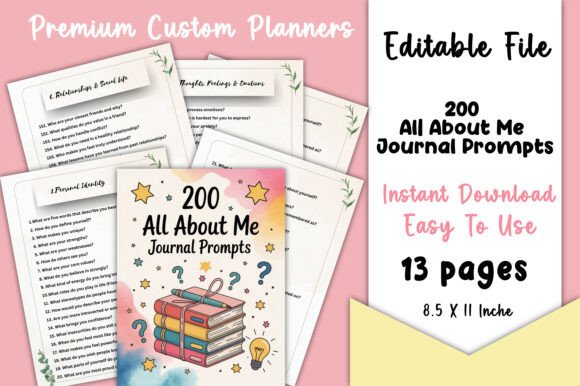
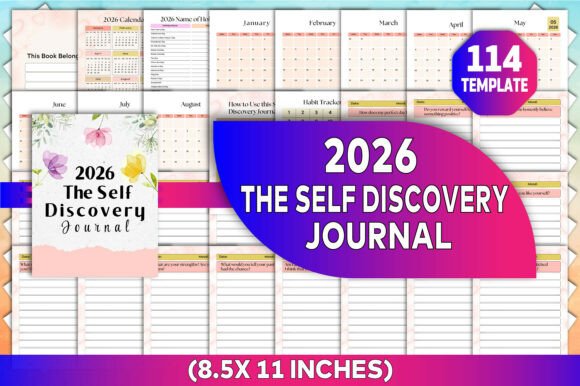
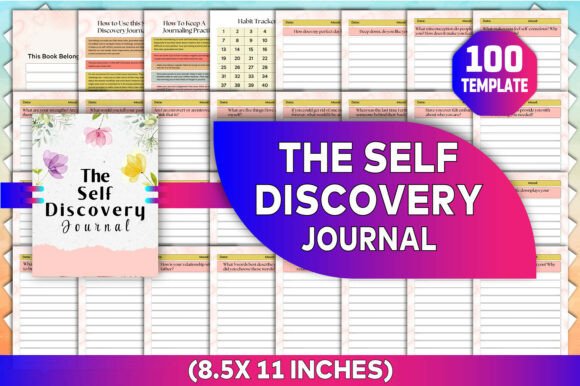
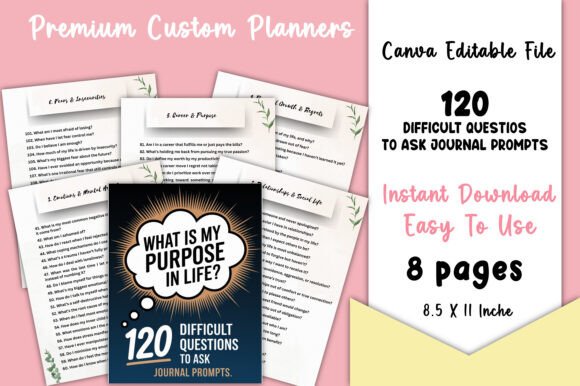
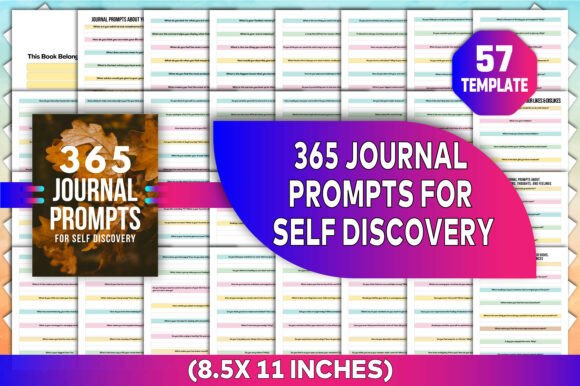
This isn’t a static PDF you print once and forget. You receive a fully editable Canva template—100% customizable, original, and print-ready. That means you control the voice, tone, layout, and visual language. Swap fonts to match your brand. Adjust spacing for readability. Add your logo or watermark. Change colors to reflect calm, energy, or creativity—whatever supports your intention. The interior includes 57 unique prompt layouts (not just repeated pages), each thoughtfully designed for clarity and emotional resonance. Every file meets professional KDP standards: 8.5 x 11 inches, 300 DPI, with high-quality PDF, JPG, and PNG versions included.
Creative Possibilities Beyond Personal Use
Designers and educators use this interior as a flexible foundation—not just for journals, but for guided workbooks, therapy tools, classroom reflection packets, or coaching resources. A freelance writer might adapt prompts into a themed newsletter series (“Prompt of the Week”), pairing each with a short personal reflection and actionable insight. A small business owner could embed select prompts into onboarding materials to help new team members articulate strengths and communication preferences. An educator might curate 30 prompts focused on identity, growth mindset, and empathy—and turn them into printable discussion cards for middle school advisory periods.
The key is intentionality in selection and framing. For example:
- For mental health practitioners: Choose prompts from the “Emotions, thoughts, and feelings” and “Health and well-being” sections—then add gentle guidance like “No need to analyze. Just name what’s present.”
- For creatives building a brand: Pull from “Dreams and plans” and “Relationships” prompts, then rephrase them as audience-facing questions in a lead magnet: “What kind of connection do you want to create with your ideal client?”
- For educators or group facilitators: Use the “Highs, lows, and past experiences” prompts as springboards for storytelling circles—printed on tear-off cards with space for brief notes.
How Different Users Adapt It With Purpose
A blogger launching a self-development course might export 90 prompts into a beautifully formatted Notion template—grouped by theme, tagged by difficulty level (introductory, reflective, deep-dive), and paired with optional journaling tips. A therapist could print double-sided prompt cards, laminate them, and use them in-session—letting clients choose one that resonates before writing or discussing.
Freelancers and solopreneurs often struggle with decision fatigue and misaligned priorities. Using prompts like *“When did I last say ‘yes’ out of obligation instead of desire?”* or *“What task drains me—even when it looks productive?”* helps surface hidden friction points. Pair those insights with a simple tracking column in your planner: date, prompt, 2-sentence reflection, one small action step.
For publishers preparing a KDP launch, this interior offers speed and flexibility. You’re not designing from scratch—you’re refining. Tweak headers, insert your subtitle and author bio, adjust margins for bleed, and export directly for upload. The “This Book Belongs To” cover page and “Thank You” note are pre-formatted but fully editable—so your branding stays cohesive, and your reader feels personally welcomed.
Keeping It Clear, Consistent, and Original
Customization doesn’t mean chaos. To keep results effective and audience-friendly, start with structure: group prompts by theme (e.g., “Relationships,” “Dreams and Plans”) and maintain consistent typography and spacing across pages. Avoid overcrowding—white space invites reflection, not overwhelm. If adding illustrations or icons, use them sparingly and purposefully (e.g., a subtle leaf icon beside prompts about growth, a compass beside ones about direction).
Consistency also lives in voice. If your audience values warmth and accessibility, avoid clinical or overly abstract language. Instead of *“Interrogate your cognitive dissonance,”* try *“When have your actions and beliefs quietly disagreed? What was that like?”* Clarity comes from specificity—not cleverness.
And originality? It’s in how you combine, sequence, and contextualize—not in rewriting every prompt. One creator added short “Why This Matters” footnotes beneath selected prompts (“This question helps uncover hidden expectations you carry into friendships”). Another embedded QR codes linking to audio reflections they recorded—turning static pages into an interactive experience.
Practical Tips for Getting Started—Today
You don’t need to plan a full year ahead. Open the Canva link. Duplicate the first prompt page. Change the question to something that’s been on your mind lately—maybe *“What’s one thing I’ve stopped doing that I miss—and why?”* Print it. Write for seven minutes. Notice what surfaces.
If you're creating for others: test three variations of the same prompt with different audiences. Try one version in a workshop, another in a newsletter, a third in a printed workbook. Track engagement—not just completion rates, but depth of response, follow-up questions, or shared insights. That feedback becomes your best design guide.
Remember: the power of 365 Journal Prompts for Self Discovery isn’t in completing all 365. It’s in returning—again and again—to what’s true, tender, or simply overlooked. Whether you’re using it solo, sharing it with clients, or publishing under your own imprint, it works because it meets people where they are: curious, capable, and ready to listen—to themselves.