Why the 2026 ADHD Self Care Planner Canva Is a Game-Changer for Focus, Flow, and Real-Life Balance
Living with ADHD means constantly navigating a world built for linear thinking—while your brain thrives on connection, movement, and meaning. Routines don’t stick unless they’re deeply personal. To-do lists collapse under overwhelm. Calendars feel like obligations, not tools. That’s why so many adults, students, entrepreneurs, and caregivers are turning to the 2026 ADHD Self Care Planner Canva: not as another rigid system, but as a responsive, joyful, fully editable companion designed *with* neurodivergent energy—not against it.
More Than a Planner: A Fully Customizable Support System
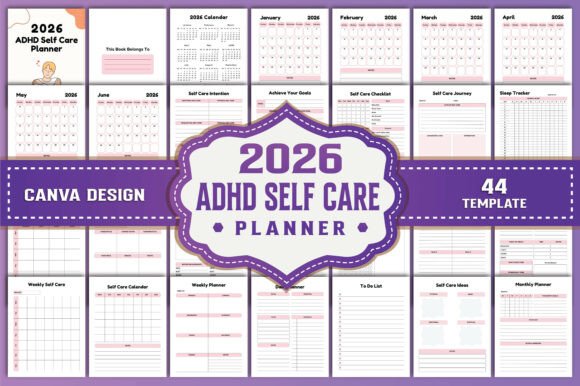
The 2026 ADHD Self Care Planner Canva isn’t just a static PDF you print and hope works. It’s a living document—44 pages of thoughtfully layered, high-quality, print-ready files that you own and adapt down to the pixel. You’ll receive an editable Canva link, plus downloadable PDF, JPG, and PNG versions—all sized at 8.5 x 11 inches for easy home or professional printing. Every page is 100% customizable: change fonts, colors, layouts, icons, even the tone of prompts. No design skills needed—just drag, drop, and make it yours.
This level of control matters. When your planner reflects your actual rhythm—not someone else’s ideal—it stops feeling like homework and starts feeling like care. Want to swap the “Gratitude Tracker” for a “Sensory Check-In”? Done. Prefer your “Medication Tracker” as a visual chart instead of a table? Easy. Need your “School Day Checklist” to include transition timers and fidget notes? Add them. That flexibility isn’t a bonus—it’s foundational for sustainability.
What’s Inside—and Why Each Page Serves a Real Need
The 44-page structure wasn’t built from generic templates. It was assembled with daily ADHD realities in mind—moments of forgetfulness, emotional dysregulation, executive function fatigue, and the deep need for self-compassion.
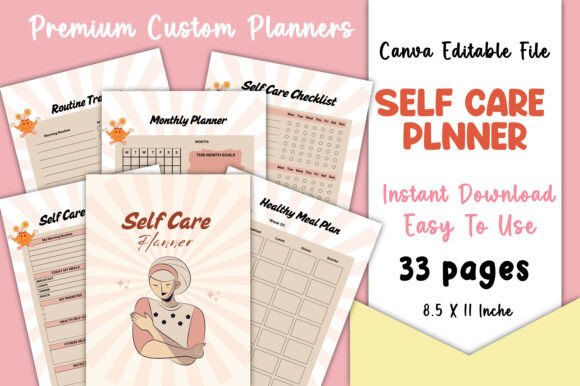
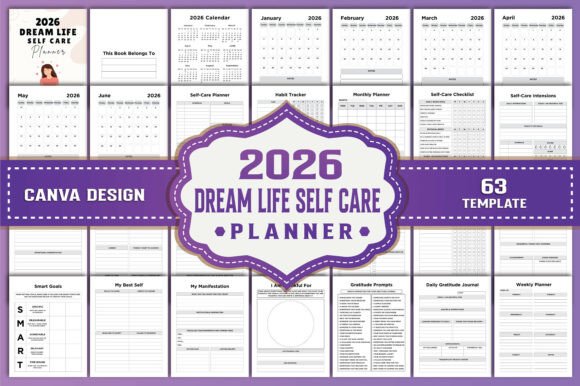
- Daily & Weekly Planners with built-in buffer zones and time-blindness accommodations—like “flex blocks” and “energy-level indicators”—so scheduling feels realistic, not punishing.
- Self Care Calendar + Monthly Self Care Planner that go beyond bubble baths: they prompt reflection on rest types (physical, mental, social), sensory needs, and micro-renewals—because self-care for ADHD isn’t indulgence; it’s maintenance.
- Habit & Routine Trackers designed for consistency—not perfection. Includes streak-free options, “did something” checkboxes, and gentle reset prompts—no guilt, just growth.
- Mood & Sleep Trackers with visual scales and open-ended notes, helping spot patterns without demanding clinical precision.
- Pampering Checklist, Bucket List, and Transformation Grocery List—yes, really. These aren’t fluff. They’re intentional scaffolds for motivation, identity reinforcement, and reducing decision fatigue before big tasks.
- Goal Planner + “This Book Belongs To” cover—a small but powerful anchor. Claiming ownership over your process builds agency, especially after years of external expectations.
Even the extras serve purpose: the “Thank You Files” section helps reduce resentment in shared spaces (think co-parenting or roommates), while “Healthy Meal Plan” pages include meal prep windows—not just recipes—because planning dinner when you’re drained is its own kind of labor.
How It Fits Into Modern Workflows—Without Adding More Work
You’re not buying a planner to spend hours formatting it. You’re buying time back. The 2026 ADHD Self Care Planner Canva KDP Interiors version proves that—designed specifically for creators who sell digital planners on Amazon KDP, it includes bleed-safe margins, CMYK-ready color profiles, and interior-only files optimized for paperback printing. But its real-time-saving superpower is how quickly you can iterate.
Imagine launching a coaching program and needing client-specific versions: one with IEP-aligned school trackers, another with freelance income + tax deadlines, a third with postpartum recovery milestones. With the editable Canva link, you duplicate, tweak, and export in under 10 minutes—no designer on retainer, no waiting, no extra cost. That’s why therapists, ADHD coaches, teachers, and content creators consistently choose this file set: it scales with your impact.
And because every file is print-ready and high-resolution, you avoid the pixelated disappointment of low-DPI downloads. Print crisp copies for therapy sessions, bind a physical version for desk use, or share clean PDFs with clients—all from the same source.
Practical Considerations Before You Download
Before diving in, here’s what to know:
- No subscriptions. No monthly fees. You pay once, download instantly, and own all files outright—including future updates if the creator releases improvements.
- Canva access required—but free tier works. You don’t need Pro to edit text, colors, or layout. Pro unlocks background remover and some brand kits—but those aren’t necessary for personalization.
- Not app-based. Not cloud-synced. This is intentional. If notifications drain you or syncing fails mid-day, having full local control (via PDF + editable Canva) means zero dependency on Wi-Fi, updates, or platform changes.
- Print-friendly by design. All pages respect standard margins, include crop marks where needed, and avoid thin fonts or light grays that vanish on home printers.
It’s also worth noting: this isn’t a replacement for clinical support—but it *is* a powerful bridge between therapy goals and everyday life. One user shared how adding her therapist’s “pause-and-name-the-feeling” prompt into the Mood Tracker helped her practice regulation outside sessions. Another used the “Goal Planner” to break a burnout recovery plan into tactile, non-linear steps—each tied to a specific self-care action, not just deadlines.
Who Benefits Most From the 2026 ADHD Self Care Planner Canva?
While built with ADHD in mind, its flexibility resonates widely:
- Students juggling classes, part-time work, and social energy—using the “School Day Checklist” alongside the “Energy Tracker” to pace themselves across the week.
- Entrepreneurs and solopreneurs who need structure without rigidity—customizing the “Goal Planner” to reflect project phases, not calendar dates.
- Parents and caregivers managing their own needs while supporting others—leveraging the “Pampering Checklist” and “Gratitude Tracker” to protect their reserves.
- Therapists and coaches offering tangible tools between sessions—adding their logo, adjusting language, or embedding CBT exercises directly into the “Notes” or “Self Care Ideas” pages.
What unites them? A shared need for systems that honor complexity—not simplify it away.
Final Thought: Your Planner Should Serve You, Not the Other Way Around
The 2026 ADHD Self Care Planner Canva succeeds because it rejects the myth that productivity requires sacrifice. Instead, it assumes that clarity comes from alignment—not force. That rest is strategic. That customization isn’t extra work—it’s essential care. Whether you’re using it to gently relearn your rhythms, launch a service-based business, or simply show up more fully for yourself each day, this planner meets you where you are—with space, warmth, and 100% editable permission to begin again.
When your tools reflect your truth, consistency becomes possible—not because you’ve fixed yourself, but because you’ve finally stopped fighting your own design.